


Wireless Calling System Restaurant Signs Dubai
5 Critical Wireless Calling System Restaurant Signs You Shouldn't Ignore
Walk into any busy restaurant in Dubai during peak hours and you'll usually spot the same problem: servers weaving between tables trying to catch a guest's eye, kitchen staff shouting across the pass, and a manager trying to keep track of who needs what, where. It works fine on a quiet Tuesday — but on a packed Friday night, a missed table can mean a lost tip, a bad review, or a guest who simply doesn't come back. The wireless calling system restaurant signs below are the patterns most Dubai venues notice right before they decide it's time for a proper solution.
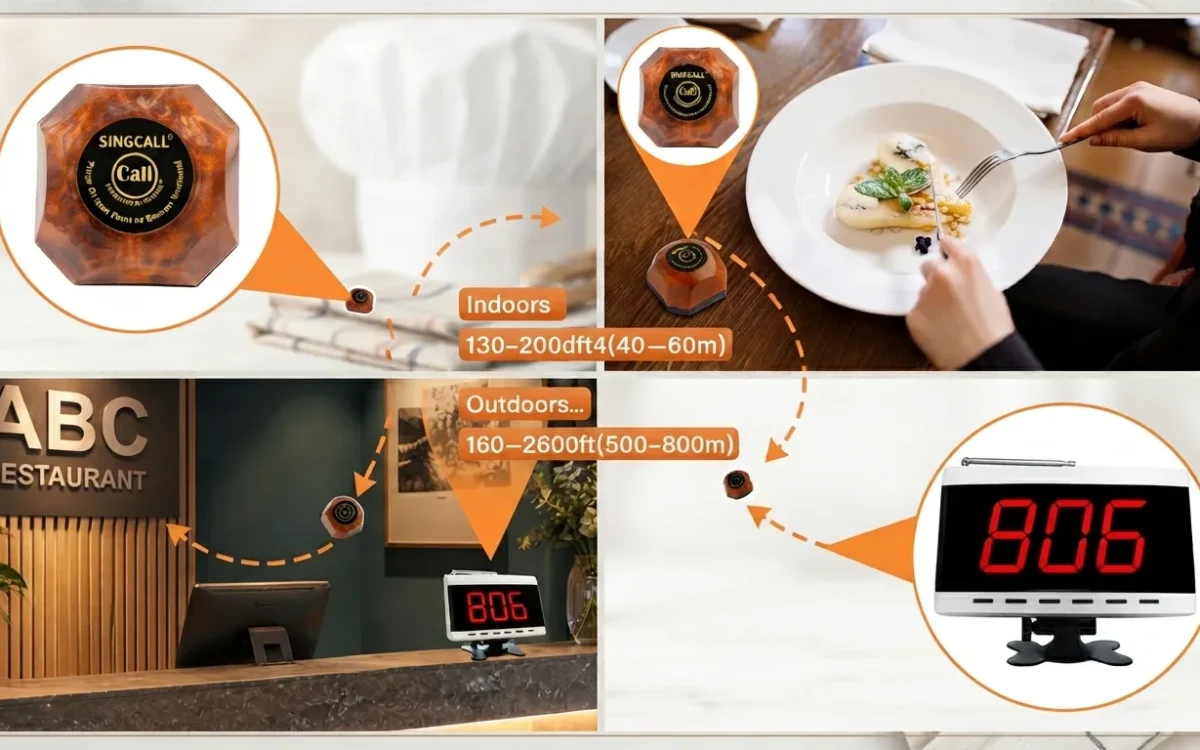
Quick Answer: The clearest wireless calling system restaurant signs are: staff spending more time scanning the room than serving, guests complaining about slow response, a venue that spans multiple floors or a large footprint, running a food court or takeaway counter, or wanting a way to measure and escalate missed calls. A typical setup includes call buttons at each table, a receiver or pager for staff, and a repeater for larger venues — installed in a day without any cabling.
1. Your Team Spends More Time Looking Than Serving
If your servers are constantly scanning the room to check whether a table needs attention, that's time not spent serving, upselling, or turning tables. A wireless call button lets a guest send an instant alert the moment they need something, so staff respond to a signal instead of guessing.
This sign is easy to miss because it doesn't look like a problem — it looks like staff "keeping an eye on the floor," which sounds diligent. But every few seconds spent scanning a section instead of prepping a table, running food, or upselling a dessert is time that adds up across a full shift. Restaurants that track it often find their floor staff spend far more of their shift watching than actually working the room.
2. You've Had Complaints About Slow Service
Slow response time is one of the most common complaints in restaurant reviews — and often it's not that staff are slow, it's that they didn't know a table needed them. A wireless calling system removes the guesswork: the moment a button is pressed, the assigned pager or receiver shows exactly which table called.
The frustrating part for most owners is that the fix isn't usually "hire more staff" — it's closing the gap between when a guest needs something and when staff find out. A wireless calling system closes that gap directly, without adding a single person to the floor, which is why it's often one of the fastest, lowest-cost fixes for a recurring service complaint.
3. Your Venue Has Multiple Floors or a Large Floor Plan
In a single small café, shouting across the room might still work. But once a venue spans multiple floors, outdoor seating, or a large dining hall, line-of-sight and hearing range stop being reliable. Wireless calling systems typically cover 80-150 meters indoors, and a repeater can extend that further across large or multi-floor properties — something a manual call bell simply can't do.
Layout is one of the most common reasons a restaurant reaches out for a site survey in the first place. A rooftop section, a basement dining area, or an outdoor terrace separated from the main hall by a wall or a garden all create the same problem: staff either can't hear a call for help, or don't notice a raised hand from across the room. A repeater-backed system solves this without needing line of sight at all.
4. You Run a Cloud Kitchen, Food Court or Takeaway Setup
Pager-style wireless calling systems — the coaster or puck-style devices customers take back to their table — are widely used in food courts and takeaway counters precisely because they don't need a fixed table assignment. A customer places an order, gets handed a pager, and is alerted the moment their order is ready, freeing up counter staff instead of having them call out order numbers.
This format also solves a noise problem that's easy to underestimate. Shouting order numbers across a busy food court adds to an already loud environment, and customers standing further away often miss their number entirely. A pager buzzes or lights up in the customer's hand, so there's no announcement to mishear and no confusion about whose order just came up.
5. You Want to Track Response Times or Escalate Missed Calls
More advanced wireless calling systems support automatic re-paging and manager escalation — if a call isn't acknowledged within a set time, it re-pages or alerts a supervisor. For venues that take service consistency seriously, this turns "we think service is fine" into something measurable.
Why Ignoring These Signs Costs More Than the System Would
None of these five signs are dramatic on their own — a slightly slower table here, a missed call there. That's exactly why they're easy to put off fixing. But in a competitive dining market like Dubai, a guest rarely complains directly — poor customer service more often shows up as a guest who simply doesn't return. The real cost of ignoring these signs isn't one bad night, it's the slow, steady drop in repeat visits and average review score that a restaurant often doesn't notice until it shows up in the numbers months later.
Compared to that, a wireless calling system is a small, one-time investment: no monthly subscription, no Wi-Fi dependency, and — as covered below — no cabling or major installation disruption to the venue.
Recognized the Wireless Calling System Restaurant Signs? Here's What a Typical Setup Looks Like
A restaurant wireless calling system usually includes:
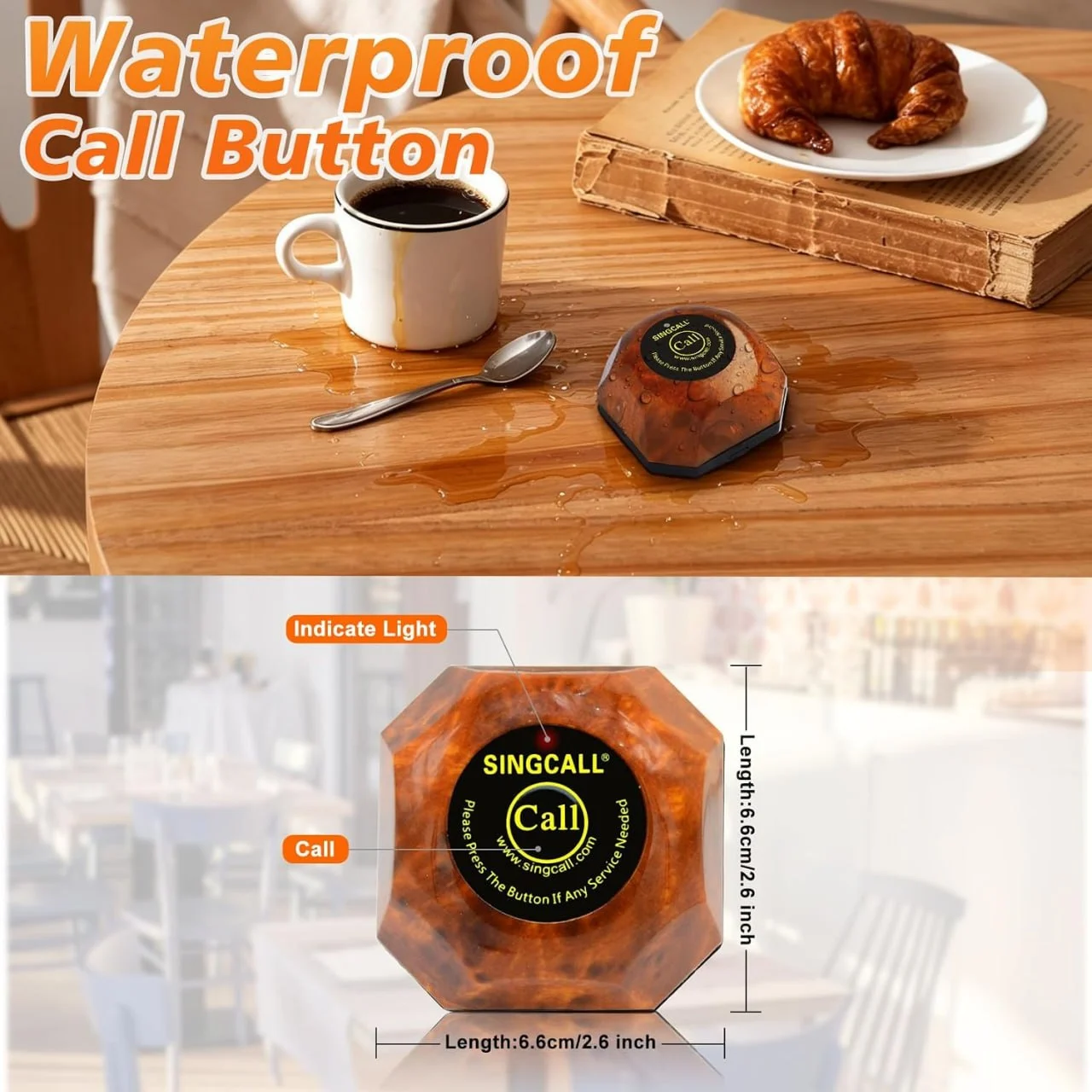
- Call buttons at each table — often labelled Call, Bill and Clear
- A receiver or pager system for waitstaff, showing which table called
- A repeater if the venue is large or spans multiple floors
Installation is usually straightforward — most systems run on RF (radio frequency) communication, so there's no cabling between the call button and the receiver, and a small to mid-size restaurant can typically be fitted out within a day without disrupting service.
The same core technology is used well beyond restaurants — hospitals use a nurse-call version paired with corridor light indicators, hotels use it for guest paging, and warehouses use staff call buttons for coordination.
Cost is usually the first question owners ask, and it depends mainly on how many call points and pagers the venue needs — a small café with a handful of tables needs far less equipment than a multi-floor restaurant with 40+ covers. This is exactly why a short site survey before quoting matters: it prevents both overpaying for unnecessary coverage and underbuying a system that can't reach every table.
FAQs on Wireless Calling System Restaurant Signs
How do I know if my restaurant needs a wireless calling system?
Common signs include staff spending too much time scanning tables instead of serving, recurring complaints about slow service, a large or multi-floor layout, and wanting a way to track or escalate missed calls.
What does a restaurant wireless calling system usually include?
A typical setup includes call buttons at each table (often labelled Call, Bill and Clear), a receiver or pager system for waitstaff, and a repeater if the venue is large or spans multiple floors.
Is a wireless calling system only useful for large restaurants?
No. Even small cafés and takeaway counters use pager-style systems to alert customers when an order is ready, and small venues with multiple floors or outdoor seating often benefit as well.
Does a wireless calling system require cabling?
No. Most systems run on RF (radio frequency) communication between the call button and receiver, so there's no cabling required and installation typically takes a single day for a small to mid-size venue.
Can a wireless calling system track response times?
More advanced systems support automatic re-paging and manager escalation if a call isn't acknowledged within a set time, which helps venues monitor and improve staff response consistency.
How much does a restaurant wireless calling system cost?
Cost depends mainly on the number of call points and pagers needed, which is why a short site survey is done first — a small café needs far less equipment than a large, multi-floor restaurant.
Does a wireless calling system replace waitstaff?
No. It doesn't replace staff — it removes the guesswork of knowing which table needs attention, so the same team can respond faster and cover more tables without missing calls.
Spotted These Wireless Calling System Restaurant Signs?
Zane Wave handles wireless calling system projects end to end — site survey, equipment sizing, installation and staff training.
See Our Wireless Calling Systems Service