
Starlink vs VSAT
- By Nimrah Shahid
- September 9, 2026
- Satellite Communication
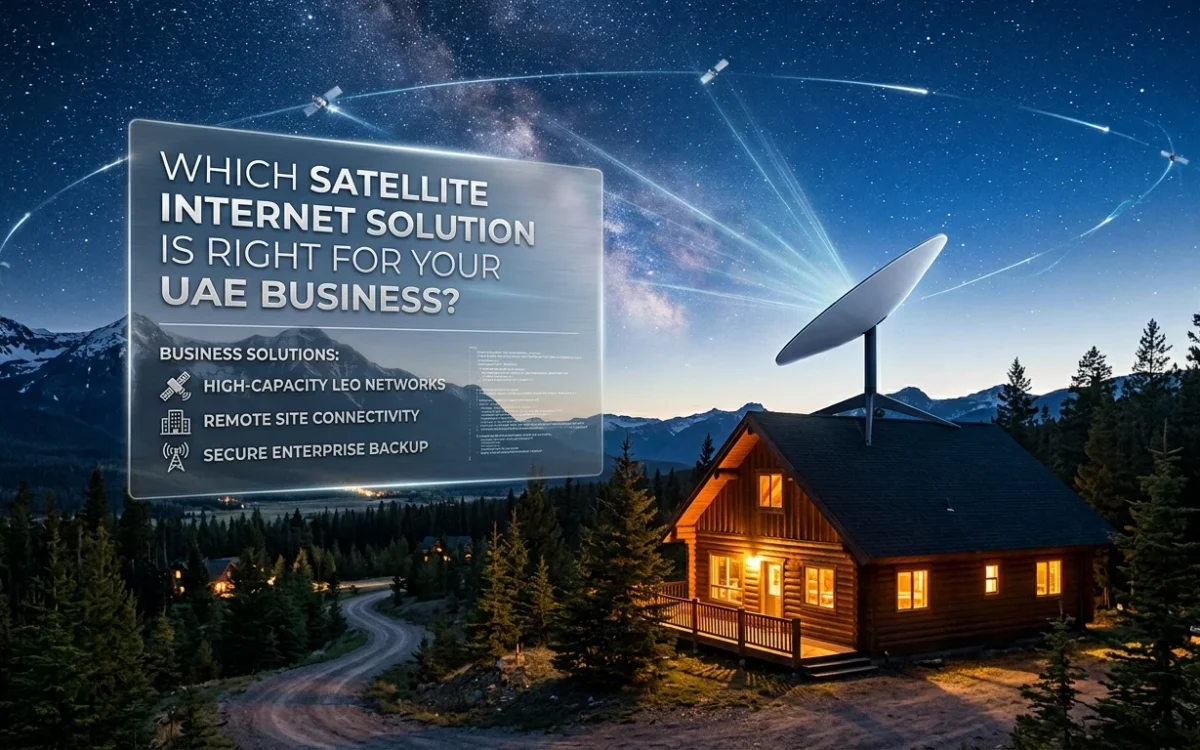
Starlink vs VSAT — if your business operates outside the reach of fibre or reliable 4G — whether that's a construction camp in the desert, a vessel offshore, or an oil and gas site — you've likely come across these two names. Both deliver internet via satellite, but they solve slightly different problems.
Starlink vs VSAT: Starlink is a low-Earth-orbit satellite network offering fast self-install setup and lower cost, best suited to single sites, vessels and small remote offices. VSAT is a custom-engineered enterprise system offering dedicated bandwidth and guaranteed uptime, better suited to offshore oil and gas platforms and large marine operations with strict service-level requirements.
Starlink: Fast Setup, Growing Coverage
Starlink is now officially available in the UAE, giving businesses a genuine alternative to traditional providers for remote connectivity. It uses a network of low-Earth-orbit (LEO) satellites, which means lower latency (20–40ms) compared to older satellite technology.
Good Fit For
- Construction camps and desert farms needing quick, self-install connectivity
- Small to mid-sized remote offices
- Vessels using Starlink Roam (permitted while moving through UAE waters)
Worth Knowing
- No separate TDRA permit needed for standard use
- Follows the same UAE content filtering and VoIP restrictions as other providers
- Not a way around local regulations — just another connectivity option
VSAT: Built for Enterprise-Scale Connectivity
VSAT (Very Small Aperture Terminal) technology has been the backbone of enterprise satellite communication for decades. Unlike Starlink's consumer-first approach, VSAT systems are typically custom-engineered for the specific bandwidth, redundancy and uptime requirements of an operation.
Not sure which system fits your site?
A short site assessment usually identifies whether Starlink, VSAT, or both make sense for you.
Starlink vs VSAT: Side-by-Side Comparison
Here's a quick Starlink vs VSAT breakdown across the factors that matter most for UAE businesses:
| Factor | Starlink | VSAT |
|---|---|---|
| Setup | Fast, self-install | Custom-engineered, professional install |
| Latency | 20–40ms (low) | Higher (geostationary) or low (LEO VSAT) |
| Cost | Lower upfront & subscription | Higher, but scalable for enterprise |
| Service-Level Guarantee | Consumer-grade, no SLA | Enterprise SLA available |
| Best For | Single sites, vessels, small offices | Offshore platforms, large marine, oil & gas |
| UAE Regulatory Status | No special permit for standard use | Licensed enterprise deployment |
Starlink vs VSAT: Which One Do You Actually Need?
A simple way to think about it:
- If you need connectivity fast, at a lower cost, for a single site or vessel — Starlink is usually the practical choice.
- If your operation depends on guaranteed uptime, custom bandwidth allocation, or enterprise-grade support contracts — VSAT remains the stronger fit, particularly for oil and gas and large marine operations.
Many businesses actually end up using both — Starlink as a reliable, low-cost primary or backup connection, and VSAT for mission-critical operations where a service-level guarantee matters.
Frequently Asked Questions
Not Sure Which Fits Your Site?
Zane Wave is a satellite communication services supplier in UAE, supplying and installing both VSAT systems and Starlink, alongside Inmarsat and Thuraya satellite phones, for marine, oil & gas and remote-site operations.